Power Bank Design and Development: Complete Safety Engineering Guide to Prevent Overheating & Explosion
Meta Description: Learn professional power bank design and development processes, including cell selection, BMS circuit protection, thermal management, structural safety, software monitoring, and certification testing. Master core engineering solutions to avoid power bank overheating, short circuit, and explosion risks.
Portable power banks are high-energy-density lithium battery products widely used in consumer electronics. Improper design, poor circuit protection, or unqualified material selection will easily cause overheating, internal short circuits, thermal runaway, and even explosion hazards. For hardware designers, manufacturers, and procurement engineers, standardized power bank design and development processes are the core foundation of product safety and compliance.
1. Core Battery Material Selection: Fundamental Safety Barrier
The safety of power banks starts with battery cell materials. High-quality cell selection and matching auxiliary materials can fundamentally reduce thermal runaway risks.
1.1 Standardized Lithium Battery Cell Selection
Industrial-grade safe power bank solutions prefer mainstream branded lithium-ion and lithium polymer cells such as ATL, LG Chem, and Panasonic. These branded cells have stable consistency, low internal resistance, and complete safety certification systems.
Designers must strictly prohibit disassembled cells and B-grade cells. All cells need to provide complete UN38.3 and IEC 62133 qualification reports to ensure compliance with international transportation and consumer electronic safety standards.
In terms of energy density balance, high-nickel ternary cells with higher energy density require stricter thermal management and overcurrent protection design to avoid safety risks caused by high-load operation.
1.2 Protective Auxiliary Material Configuration
Internal material optimization effectively prevents internal short circuits under high temperature and impact conditions:
- High-temperature resistant diaphragm: Adopt ceramic-coated or PE/PP composite high-temperature diaphragms to avoid thermal shrinkage and internal electrode short circuit under high-temperature working conditions.
- Flame-retardant electrolyte: Add flame retardant components such as tricresyl phosphate to the electrolyte to suppress combustion diffusion and reduce explosion risks during thermal runaway.
2. Hardware Circuit Safety Design: Multi-Layer BMS Protection & Redundancy Mechanism
BMS (Battery Management System) is the core safety guarantee of power banks. Professional R&D designs adopt multi-dimensional threshold detection and dual redundancy circuits to avoid single-point failure risks.
2.1 Full-Function BMS Multiple Protection Circuit
Precision circuit detection ensures real-time risk cutting with strict parameter standards:
- Overcharge & overdischarge protection: Voltage detection accuracy ≤ ±25mV, protection response time < 100ms to avoid battery aging and bulging caused by abnormal voltage.
- Overcurrent & short circuit protection: Adopt dual-stage protection of hardware MOSFET + software threshold calibration, which can quickly cut off output for sudden short circuit and fast charging abnormal current.
- Real-time temperature protection: Built-in NTC thermistor for whole-process temperature monitoring; trigger power reduction at 55℃ and forced power-off protection at 65℃ to prevent high-temperature thermal runaway.
- Cell equalization circuit: For multi-series cell power bank solutions, active equalization technology is configured to eliminate voltage inconsistency between cells and avoid local overcharge safety hazards.
2.2 Industrial-Level Redundancy Design
To solve the failure risk of single protection circuit, high-quality power bank designs adopt dual safety redundancy:
- The core charging management IC adoptsdual-channel independent control. When a single circuit fails, the backup circuit automatically intervenes to ensure uninterrupted protection.
- Equipped with PPTC resettable fuse as the secondary overcurrent protection to avoid permanent short circuit damage caused by MOS failure.
3. Mechanical Structure & Thermal Management Design: Anti-Fall, Anti-Leakage & Heat Dissipation Optimization
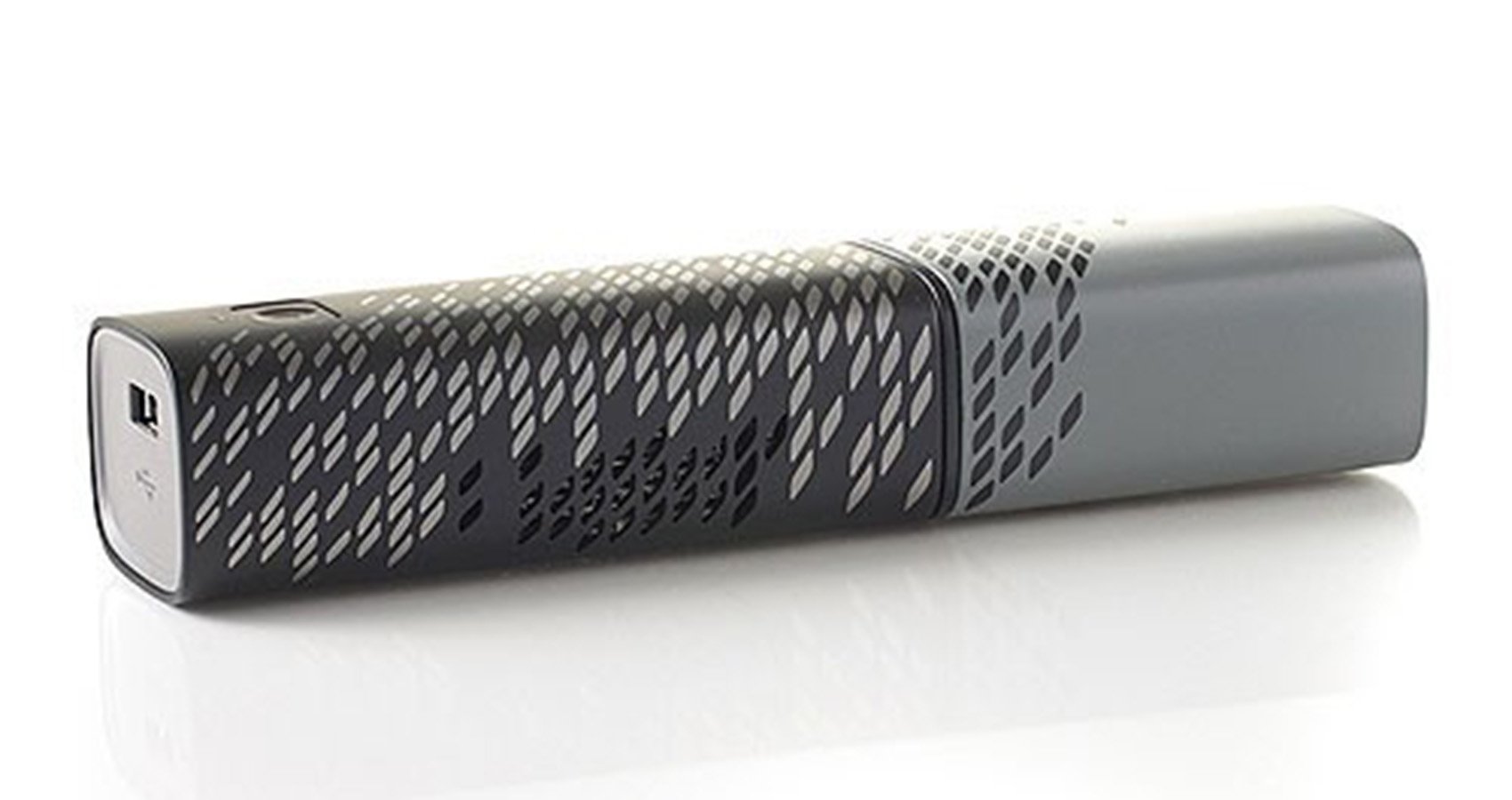
Structural design determines the safety tolerance of power banks in falling, squeezing and high-temperature environments. Reasonable thermal management can suppress the spread of thermal runaway.
3.1 High-Safety Structural Design
- Flame-retardant fixed bracket: The cell is fixed with V0-grade PC/ABS flame-retardant material to prevent electrode damage and internal short circuit caused by cell displacement after falling.
- Pressure relief valve design: Metal casing power banks are equipped with directional pressure relief structures to release internal high-pressure gas generated by thermal runaway and avoid overall explosion and cracking.
- Drop resistance optimization: Pass 1.5-meter free drop test. Internal silicone buffer pads absorb impact force to protect cells and circuit boards from mechanical damage.
3.2 Scientific Thermal Diffusion Control
Thermal cascade reaction is the main cause of power bank explosion. R&D design strictly controls heat accumulation:
- The spacing between adjacent cells is ≥ 3mm to isolate heat conduction and prevent chain thermal runaway.
- High-power models (≥50W fast charging) are equipped with graphene heat conduction sheets or vapor chamber (VC) to realize uniform heat dissipation and reduce local high temperature.
4. Intelligent Software Monitoring & Dynamic Protection Strategy
Modern smart power banks rely on software algorithms to realize active safety management, achieving real-time adjustment and fault prediction beyond hardware limits.
4.1 Dynamic Power Adjustment
The MCU monitors temperature, battery level and load status in real time, automatically reducing fast-charging power under high temperature and low voltage conditions to avoid thermal overload caused by long-term high-power operation.
4.2 Intelligent Fault Self-Diagnosis & Lockout
The system identifies abnormal states such as cell bulging, excessive charging and discharging cycles, and abnormal temperature rise. It triggers LED warning or APP remote reminder, and locks the output function to force termination of dangerous working conditions.
4.3 Operation Data Traceability
Built-in data log records all abnormal events including over-temperature, over-current and over-voltage. It facilitates manufacturers to analyze root causes after sales and iteratively optimize hardware and software design.
5. Production Process & Extreme Verification Testing
Excellent design needs standardized production and strict testing to achieve mass production safety consistency.
5.1 Strict Production Process Control
- Cell sorting and matching: The voltage and internal resistance difference of paired cells is controlled within 1% to ensure consistent charge and discharge efficiency of the whole pack.
- High-reliability welding process: Priority laser welding is adopted instead of traditional spot welding to improve the connection stability of tabs and avoid virtual welding and ignition risks.
5.2 Full Standard Extreme Test Verification
Mass-produced power banks must pass industry-standard abuse tests and environmental reliability tests:
- Abuse test: Complete acupuncture, extrusion, and 130% overcharge tests in an explosion-proof box to verify extreme safety tolerance.
- Environmental cycle test: After 500 charge-discharge cycles in the temperature range of -20℃ to 60℃, the capacity attenuation is controlled within 20%.
- Official certification: Full compliance with UL2054 and GB/T 35590 safety standards to meet global market access requirements.
6. Terminal Anti-Misuse Design & User Safety Guidance
Most power bank safety accidents are related to user misuse. Professional R&D will embed user-level protection design in advance.
6.1 Physical Anti-Misuse Protection
- Interface fool-proof design: Lightning and Type-C interfaces adopt irreversible insertion structure to avoid interface damage and short circuit caused by wrong insertion.
- No-load automatic sleep: The output port automatically enters low-power sleep state without load, effectively preventing short circuit caused by accidental contact with metal foreign objects.
6.2 Standard Safety Warning Identification
The shell is printed with standardized icons of “No Disassembly” and “No Soaking”. The user manual clearly reminds users to keep away from high-temperature environments, fire sources and humid environments to reduce daily use risks.
7. Industry Classic Case Reference
Top mainstream brands in the industry have verified the effectiveness of multi-dimensional safety design:
- Anker PowerCore Series: Adopt multi-point temperature sensor array + step-down fast charging strategy, dynamically control whole-machine temperature rise, and achieve zero thermal runaway in long-term fast charging cycles.
- Xiaomi Power Bank Series: Equipped with all-metal heat dissipation shell and dual over-current protection chips, passing multiple international authoritative certifications, with excellent structural impact resistance and circuit safety performance.
Power bank safety is a systematic project covering material selection, circuit design, structural heat dissipation, intelligent software control, production testing and user protection. Through standardized R&D processes and multi-layer safety redundancy design, manufacturers can greatly reduce the risks of overheating, short circuit and explosion of lithium power banks.
With the iteration of solid-state battery technology and intelligent BMS algorithms, the safety performance of portable mobile power supplies will be further upgraded. At the same time, standardized user usage habits are also an indispensable part of product safety.