430 Million Users, 30% Female Players: How This SLG Game Stayed Popular for 2 Years
1. The 3-Month Make-or-Break Rule: The Harsh Reality of Mini-Games

On July 17, Three Kingdoms: Ice Age marks its 2nd anniversary. In an industry where short lifespans are the norm, a game running steadily for two years is a highly valuable case study.
The WeChat mini-game market keeps expanding. In 2025, its commercial scale grew by nearly 20%, serving more than 400,000 developers. Yet behind the positive numbers lies an extremely high elimination rate. For IP-based games, over 240 new titles launched in the first five months of 2025. Fewer than 15 of them retained over 500 daily active users by their third month, translating to a survival rate below 7%.
Rising customer acquisition costs further squeeze profit margins. In H1 2025, top 100 mobile games boosted ad spending by 86.6% year-on-year, exceeding 18 billion RMB. Mini-games alone consumed 144 million RMB in ad buys daily, with the number of active ad-running games rising 54% YoY.
Industry growth has cooled notably, dropping from 64.47% in 2024 to 22% in 2025. The era of reckless growth driven by traffic dividends is over; mini-games have entered a phase of refined operation amid stock competition.
Platform strategies have shifted accordingly. In 2026, WeChat Mini Games introduced the Evergreen Ecosystem concept. Li Qing, lecturer at WeChat Open Class, stated that an evergreen ecosystem is not defined by game size. Its goal is to end the industry’s short-cycle problem and allow well-polished games to grow and operate sustainably. The platform’s priority moved from chasing user volume to improving retention, extending playtime and deepening user engagement.
Against this industry turning point, the two-year top-chart performance of Three Kingdoms: Ice Age carries strong reference value for the whole sector.
2. No Head Start: How This Mini-Game Survived Two Years
Three Kingdoms: Ice Age was not born as an instant hit. The team started working on WeChat mini-games back in 2018 and gained rich long-run operation experience through seven years of maintaining Hu Lai Three Kingdoms. At the end of 2022, the team decided to build a native mini-game, instead of simply porting mobile APP game logic. They built the product fully adapted to the mini-game ecosystem.
Three core judgments laid the foundation for its long lifespan:
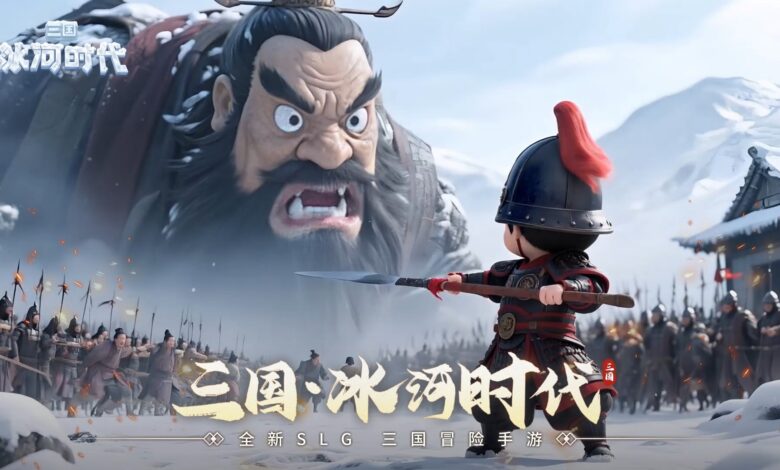
- Build a Three Kingdoms title accessible to broad audiences and attract more female players Traditional SLGs mainly target middle-aged men. The team adopted low-poly art with simple “dot-eye” characters, balancing performance and visuals. They simplified strategy complexity, lowered entry barriers and strengthened social gameplay. The result: female players account for 30% of its user base, far above the 15% average of classic SLGs. It stands out as a female-friendly Three Kingdoms game, a key pillar for sustained retention.
- Fight heavy industry competition with casual, relaxed gameplay Most SLGs focus on hardcore mechanics, brain-intensive battles and server dominance. Three Kingdoms: Ice Age took a different path. Lightweight social systems lower the learning curve, and traditional cultural elements create differentiation. Instead of competing head-on with heavy numerical grind, it positioned “relaxation” as its core selling point.
- Believe mini-games can support long-term operation Drawing from years of project experience, the team saw multiple mini-games on the platform running stably for over 7 years with tens of millions of monthly active users. Mini-games do not have to be short-lived. This belief supported continuous investment in long-term operation.
3. Turn Traditional Culture Into Playable Content: Fun Without Mandatory Grind
Traditional SLGs tend to grow heavier over time, stacking new progression systems and paid features. This adds pressure on players and eventually causes mass churn. Three Kingdoms: Ice Age took another route: integrating national cultural elements as light, interactive gameplay with no extra numerical burden, only memorable experiences.
- Tian Ji’s Horse Racing: A card strategy game. Players pick horses of upper, middle and lower tiers, play different card combos for speed boosts, and use item cards for slowdown or shields. Its core logic follows the ancient strategy recorded in Records of the Grand Historian.
- Cuju (Ancient Football): Casual PvP matches with short rounds. Match outcomes do not affect core character progression. Many players log in only to collect resources, yet end up playing Cuju with friends for half an hour, naturally extending session time.
- Dragon Boat Festival Races: Solo and 3-player team racing modes. Players get free daily attempts. Continuous paddling grants double rewards, and repeated participation unlocks one-click sweep. The design accommodates players with different available time and play habits.
These activities share one trait: no heavy grind, no cutthroat competition, no forced stat pressure. Players may forget how many cities they captured last week, but they will remember the joy of racing dragon boats or winning horse races with friends.
4. Long-termism: The Ticket to Survive Industry Cycles
The two-year journey of Three Kingdoms: Ice Age coincides with the shift from traffic-driven growth to content-driven development for mini-games. China’s mini-game market reached roughly 61 billion RMB in 2025, yet growth slowed down. The industry has reached a consensus: mini-games have entered the age of long-term operation. Player demands have changed, shifting from short fragmented entertainment to long-term, immersive content consumption.
The game’s success proves mini-games can build strong brand equity and sustain long-run operations. An industry analyst commented: While most developers kept expanding game complexity and harvesting traffic quickly, this team chose to simplify gameplay and nurture its user base. This patience is rare in the mini-game sector.
As the 2nd anniversary campaign rolls out, the title continues to polish its brand and integrate more intangible cultural heritage elements, giving players more reasons to remember this game.
In an industry where most games die within three months, surviving two years is a bold statement. Its biggest lesson for the industry is clear: mini-games are not destined for short lifespans. Long-termism is the only ticket to cross industry cycles.